


Create Your Moon List

Using a Moon List is a process of goal setting, new habit formation, and creating change, all by getting clear on our goal and tracking progress by the lunar cycle. Each phase of the moon keeps us accountable. We are reminded when we look up and see the moon, that we have a list of actions and goals that are important to us.
Adding awareness of the lunar cycle to our lives, and making time to step outside, look up, and check in, syncs our lives up with a long-term, slower, steady cycle that can help balance against the speed of today’s digital world.
Looking up and seeing the moon, we are reminded of our goals, aspirations and current affirmations. The videos below walk you through the entire process.
Creating Your Moon List
Get a piece of paper. I think this is important. It is important and helpful to have this list on a piece a paper you wrote out yourself, not something you typed into your device.
Write down a list of things you would like to get done. Some things may be dreams, big stretch ideas like going back to school, others should be smaller and very actionable tasks, like “clean the hall closest” or “paint the kitchen” or “take that class on watercolor painting”. Some goals are small and actually doable in a few hours, others may require larger life changes with multiple steps like going back to school, or career changes.
1. Write out a list of goals, new habits, projects, hobbies, things you’ve been meaning to do but just haven't done.
2. Group them into smaller goals and larger goals.
3. Select your top 5.
4. If needed, write down 3 possible smaller items that seem likely steps toward the main goal.
5. Select no more than 5 goals or tasks or affirmations. Most people find a balance of 2 short-term tasks, 2 mid-length goals and one stretch goal.
Memorize your Moon List
1. Count from one to five with your fingers. Some people start with their thumb for one. Others start with their index finger. However you do it, just remember your preferred order starting with “one”, and get to “five”.
2. Now, slowly count from one to five with your hand. One deep slow breath for each number.
3. Repeat this action.
4. Now, go through and assign a goal to each finger and thumb. The first goal goes with the preferred first phalange (finger or thumb), second with the second finger, third, etc.
5 Repeat this exercise 3 times.
6 Repeat this exercise each day until you get your list memorized.
7. Each day, take 5 minutes to sit and breathe the 5 deep breaths and review your goals. Maybe first thing when you wake up, maybe on the bus ride to school or work, maybe at work, right after you parked the car. Whenever works for you.
As you complete a goal that is on your list, keep it on the list until the next Full moon, but you can move it to the bottom of the list. Each time you come to it after it is completed – you re-enforce your “win” at having completed that task/goal.
Full Moon Review and Kickoff
As near the Full moon as life allows, review your list, remove the completed ones, and add new ones to replace them, so you are back to having five on the list. Celebrate in some small but meaningful way, your success in completing some of the goals or tasks. Its totally fine if you did not complete all 5, just keep the un-completed ones on your list.
Make it a Party!
Add an accountability partner or 2 or 3. Bring refreshments, light some candles, have a Moon List Review and Kickoff party!
Life happens
Sometimes, life gets busy. It is perfectly normal to be intentional about the Moon List for a few weeks, and then life gets busy. Suddenly, you may step outside, look up, and see that the Moon is full. You remember your goals and your list. That work got busy, family life got busy, and you dropped the ball. Important: Don’t beat yourself up for forgetting, simply just pick right back up where you were.
3 Lunar cycles List Review (3 month review): Re-size or Toss the no-action ones
The Moon List can be updated whenever a goal has been reached or a task completed. At least every third full moon, if not sooner, review your list. Is there a goal or task that is just sitting there, nagging you for action, but you haven’t taken any steps toward it? After three lunar cycles, if you haven’t taken any action, then its time to either toss the goal as perhaps you just “think” its what you want, or break the goal down into smaller chunks.
Dream Goal management:
The one goal that is a real stretch, a big change, something that seems pretty big, maybe the first month its on your list, you are just trying it on in your mind, and beginning exploring your options. For example, if its go back to school as an adult, the goal this lunar cycle may be to call or email the local community college and make an appointment with an advisor. Or, make an appointment with a personal trainer at a gym. Or a goal to get help starting saving money for the big goal. Whatever you Dream of doing, someone else has done something similar, and they are willing to talk to you about it. You don’t have to perfectly execute the Dream all on your own, you just have to ask for help, and then take the next indicated step.
Tracking your progress with the Moon
Some nights when we look up at the moon, it is full and bright; sometimes it is just a sliver of silvery light. These changes in appearance are the phases of the moon. As the moon orbits Earth, it cycles through eight distinct phases. The four primary phases occur about a week apart.
Click here to learn more about the moon at NASA's site
Click here for current Moon phase
Phases of the moon
The moon, like Earth, is a sphere, and it is always half-illuminated by the sun. As the moon travels around Earth, we see more or less of the illuminated half. The moon's phases describe how much of the moon's disk is illuminated from our perspective.
New moon: The moon is between Earth and the sun, and the side of the moon facing toward us receives no direct sunlight; it is lit only by dim sunlight reflected from Earth. A new moon doesn’t have any bright areas reflecting light towards us on Earth. Sometimes, you will be able to still see a big round dimly lit sphere.
Waxing crescent: As the moon moves around Earth, the side we can see gradually becomes more illuminated by direct sunlight.
First quarter: The moon is 90 degrees away from the sun in the sky and is half-illuminated from our point of view. We call it "first quarter" because the moon has traveled about a quarter of the way around Earth since the new moon.
Waxing gibbous: “Waxing” means “growing”
The area of illumination continues to increase. More than half of the moon's face appears to be getting sunlight.
Full moon: The moon is 180 degrees away from the sun and is as close as it can be to being fully illuminated by the sun from our perspective.
Waning gibbous: “Waning” means “Going away” or “diminishing” or “decreasing”
More than half of the moon's face appears to still be getting sunlight, but the amount is decreasing.
Last quarter: The moon has moved another quarter of the way around Earth, to the third quarter position. The sun's light is now shining on the other half of the visible face of the moon.
Waning crescent: Less than half of the moon's face appears to be getting sunlight, and the amount is decreasing.
New moon:
Finally, the moon is back to its new moon starting position. Now, the moon is between Earth and the sun.

The Dolphins of Awareness
Developing your awareness can be a great first step in creating change. The following exercises will help you to better ground yourself, pause and check in with where you are at, and then decide what is next. The exercises will expand your awareness, both with your physical surroundings as well as your mental state and internal self-talk. It will increase your spatial recognition and spatial memory which are important for how you sense your self in the world and how you move about it. Strengthening your cognitive map is the first step in building your resilience and keeping you grounded in personal choice.
The suggestion is to do the two parts of the exercise in the morning preferably, though choosing a time that works best for you to do at the same time each day is better. If possible select a location where you can see outside, even better if you can crack a window and hear whats going on outside. The best location might be a porch or deck outside. If you are in an apartment in the city with limited options, try to sit near an exterior window.
When doing the listening exercises, listen with your whole body. You will find you can feel vibrations in areas of your body, perhaps in your chest or feet or elsewhere. Notice how you can hear in all directions. This is an important first step in learning to engage all your senses together. In the process of opening to your senses more and focusing their use together you develop a sixth sense made from all the others in synergy together.
During the weeks you are practicing the exercises, pay attention to which direction you are facing as you go about your day.
As you progress with the exercises, you may find that your sense of where you are in the world grows, and it becomes easier to pay attention to a wider view of events when navigating through the day. Also, some of the questions may shift in meaning from day to day. “Where am I” becomes not just a question of location, but also a question of “Where am I in life?”. “What’s around me?” becomes more than just the physical environment, but what activity is happening around me that is creating my local atmosphere of events and emotions? “How did I get here?” becomes quite philosophical for some, as in “What series of decisions, choices, events I didn’t have control over, events I did have control over, led me to being where I am now?”
After enough daily practice - you might quiz yourself throughout your day, “What compass direction am I facing now?” See if you can do it through out your day. Also, as your practice with the exercises continues you may find your dreams may become more vibrant.
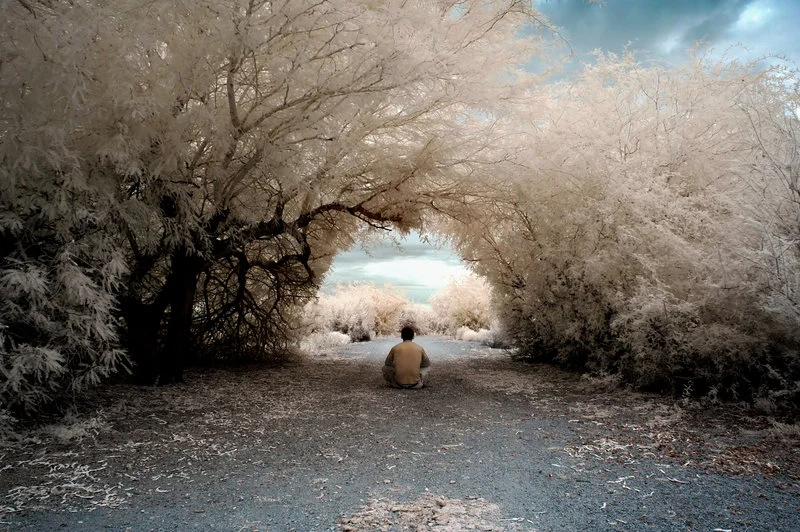
The key is to not make it complicated. I have studied from many teachers, from many traditions, and I have found it is just best to keep it simple. As you progress with your practice, you may find yourself drawn to more elaborate teachings. Better to keep it simple and do it daily than to make it elaborate and do it infrequently.
Counting meditation:
1. Sit upright, either on a chair or bench, or if you prefer a seated position on the floor, either on your knees, legs crossed in half-lot,us or full-lotus if you prefer. I was a long-distance runner, so my legs prefer a seated position on a chair or bench.
2. Sit forward a bit on the chair, relax your stomach and shoulders, rest your hands or arms on your lap. Now is not the time to worry about your stomach poking out a bit, just relax and breath!
3. With your eyes closed, partially-closed, or gently open, start taking deep full breaths. Visualize and feel your lower part of your lungs fill, expanding your rib cage. Feel your rib cage expand on the sides. Now feel your breath expand behind your pectoral muscles / upper ribs / chest. Then, as you exhale, relax your upper chest and bring in your stomach as you exhale. Repeat!
4. Now, with each breath, begin counting, so with the first breath, think “one”, nice slow exhale. Now on next breath, count “two”, and with each inhalation, add one, so on the 4th breath, you will count “four”.
5. Now, on the next breath, return to “one”.
6. Continue breathing slowly and deeply, and counting 1-4, over and over. Now, when you become aware again, you may catch yourself at 23, or 106. When you catch yourself having counted past 4, just gently let it go and on the next breath count “one”, and begin the count too 4 again. Count from 1 to 4 over and over. When you catch yourself again up at 34, or 15, or 120, simply smile inside and start back at 1…2…3…4…
I find the magic happens when I get lost and become aware again and bring myself back to 1… 2… 3… 4…
When beginning, just set a low-volume timer for 5 minutes, 10 minutes each day would be a great start. Pick a time and place that works for you. That may mean your back yard on a bench outside, listening to the wind. It may mean, your in the car, having just parked for work. The key is to allow yourself the flexibility to practice everyday. Outside is better than inside. But Inside is great, too.
Don’t let the drive for perfection kill your practice. Better to do 3 minutes on a bench at lunch then to only allow yourself to do it after you have gone through some elaborate ritual or setup.
Now, deep breath! Count “one”…
Forest Bathing
aka “Go Outside”
Get Outside
“A two-hour forest bath will help you unplug from technology and slow down. It will bring you into the present moment and de-stress and relax you. When you connect to nature through all five of your senses, you begin to draw on the vast array of benefits the natural world provides. There is now a wealth of data that proves that shinrin-yoku can:
Reduce blood pressure
Lower stress
Improve cardiovascular and metabolic health
Lower blood sugar levels
Lift depression
Improve pain thresholds
Improve energy
Boost you immune system (increase NK cells)
Lose weight
Dr. Qing Li, Into the Forest, 2018
My favorite book about Forest Bathing is here:
Into the Forest, By Dr. Qing Li, 2018
Go Outside!
At least 10 minutes a day
hopefully at least 30 minutes a day
sit or walk or run or jog or just wander
phone off or silenced - no headphones in your ears
At least once a week, outside for 2 hours or more

Get Your Daily Dose!
Connecting with Nature is a fast way I find to relax, re-connect with my physical body, release pent up emotions and energy, and expand my awareness and thought process.
I highly recommend my clients and friends add back in time in their lives to re-connect with nature. Working with tech workers and city dwellers, I have found many who never had much exposure to nature, the outdoors, and the lives that happen all around us each day, to many unnoticed. Make the choice today to start making small changes to add more time for yourself and time in nature.
Make your intention today to make time to get your daily dose of nature! You are worth it. Worth the time to unplug, disconnect, and just BE. Time to let your brain think through things that bubble up until your attention naturally shifts to the landscape around you.
Time to leave the screens behind and get back in your body. Time to just “be”, time to listen to the birds and the wind as you walk around the block, stroll through a park, or take a day and drive out of town and walk in nature.
A walk in woods is cleansing physically, mentally and spiritually. How better to integrate and utilize the power of Silence, Simplicity, and Movement, by taking a walk in the woods? Or a walk in the local park? Or a walk around the block? Or utilizing the mental space-making power of silence and simplicity by sitting in your backyard listening to the wind? Or sitting on your balcony and watching the hummingbirds? Time to be still and just BE is healing and strengthening.
What does “daily” look like for you? What can you make space for each day? A walk at lunch? A run after work? A stroll around the block at sunset?We make room for what is important.
Take time right now and right down on a piece of paper your commitment to get outside, unplug, and just BE.
Step outside! Listen to Nature
Can you hear the wind blowing? Can you smell the change in weather?
Every location has some sort of seasonal changes. Can you hear the birds migrating through? Can you see the shadows getting longer as winter approaches?
Get outside.
If you are in a major city - go toward your closest park. Listen to the activity around you - the cars, the people talking - the seagulls and pigeons flying around. Notice the sun between the buildings. Watch how the shadows change around you.
Sit in silence, or move in silence. Using simplicity - make it easy on yourself.
Get outside and allow yourself to feel the actual temperature, maybe cooler, maybe hotter than our inside constantly-same -temperature.
Maybe hike a local trail. Take a walk in the woods, or a stroll through a park.
Spend a few minutes each day weeding the garden!

Near where I grew up - high mountain desert
Article below is from: https://healthy.kaiserpermanente.org/health-wellness/healtharticle.what-is-forest-bathing
Forest bathing: What it is and why you should try it
Kaiser Permanente
5–6 minutes
Stress is a part of everyday life. But too much stress can take a toll on your mind and body. Feeling stressed for long periods of time can lead to depression, increased anxiety, and even physical symptoms, like body aches. One simple way to manage stress? Spending time in nature — or forest bathing.
What is forest bathing?
In 1982, the Japanese Ministry of Agriculture, Forestry, and Fisheries created the term shinrin-yoku, which translates to “forest bathing” or “absorbing the forest atmosphere.” The practice encourages people to simply spend time in nature — no actual bathing required. It’s also very low impact, which means you don’t have to go for intense trail runs or hikes. The goal of forest bathing is to live in the present moment while immersing your senses in the sights and sounds of a natural setting.
The health benefits of forest bathing
There’s a reason why the largest cities in the world have parks, trees, and pockets of nature mixed in throughout their busy streets. One study by the International Journal of Environmental Health Research found that spending time in an urban park can have a positive impact on a person’s sense of well-being.1
Aside from city parks, the more in-depth practice of forest bathing has been found to lower blood pressure, heart rate, and levels of harmful hormones — like cortisol, which your body produces when it’s stressed.2 This can help put you in a more calm and relaxed state.
In addition, studies have found that simply spending 10 to 20 minutes a day outdoors can lead to increased well-being and happiness — and decreased amounts of stress.3,4
How to practice forest bathing
While the word “forest” is in the name of this practice, don’t worry — heading out to a heavily wooded area isn’t required. You could take a trip to a nearby park, your favorite local trail, the beach, or any natural setting. Just be sure to turn off or silence your phone or other devices. The key is to practice mindfulness. That means being present and fully in the moment.
Once you’ve arrived at your destination, take a few deep breaths and center yourself. Focus on what your senses are taking in — whether it’s the scent of clean ocean air or a chorus of chirping birds.
Spend a few moments simply looking at your surroundings. Sit and watch how the trees sway in the wind or simply walk around. If you decide to walk, go at an easy pace and without a specific destination in mind. It’s important to let your mind and senses explore and enjoy the environment.
Safety tip: Always pay attention to your surroundings, stay on marked trails, and wear appropriate gear. Remember to consider things like sun protection and allergies. When possible, bring a friend or let someone know where you’re going and for how long.
A good rule of thumb is to practice forest bathing for at least 20 minutes every day. If you don’t have that much time to spare, that’s OK. You can start with a shorter amount of time. Plus, the goal of forest bathing is to relax and detach — the practice shouldn’t feel like a chore. It should be an activity you look forward to and enjoy.
Look for moments of wonder
No matter how much time you spend outdoors, remember to look for moments that make you feel amazement — or awe. One study found that taking “awe walks” led to increased feelings of well-being and social connection in older adults.5 You can make awe walks a part of your forest bathing practice by looking at your surroundings with fresh eyes or taking a new walking path.
You could also tie your forest bathing practice to your journaling routine. After each session, use your journal to keep track of your experience or thoughts you had while immersed in nature. This is a good way to keep track of how the practice is making you feel over time — and help you create a routine to support your total health.
More stress-fighting strategies
For more inspiration on how to stress less, check out our wellness resources — including self-care apps to help with stress, sleep, anxiety, and more.
1 Hon K. Yuen and Gavin R. Jenkins, “Factors Associated With Changes in Subjective Well-Being Immediately After Urban Park Visit,” International Journal of Environmental Health Research, February 13, 2019.
2 Bum Jin Park et al., “The Physiological Effects of Shinrin-yoku (Taking in the Forest Atmosphere or Forest Bathing): Evidence from Field Experiments in 24 Forests Across Japan,” Environmental Health and Preventive Medicine, May 2, 2009.
3 Genevive R. Meredith et al., “Minimum Time Dose in Nature to Positively Impact the Mental Health of College-Aged Students, and How to Measure It: A Scoping Review,” Frontiers in Psychology, June 13, 2019.
4 Matthew P. White et al., “Spending at Least 120 Minutes a Week in Nature is Associated with Good Health and Wellbeing,” Scientific Reports, January 14, 2020.
5 Gretchen Reynolds, “An ‘Awe Walk’ Might Do Wonders for Your Well-Being,” The New York Times, September 30, 2020.